
Today we are profiling another key Freeman patriarch James Freeman of Bedford Va. James is very interesting in our history because he is not typically associated with the NC Freeman lines and until his descendants did advanced Y-DNA testing it was not know he was connected to our NC Native Freemans or even that his line was Native at all! We hope to make more discoveries like this in the future to understand our shared lineage and history.
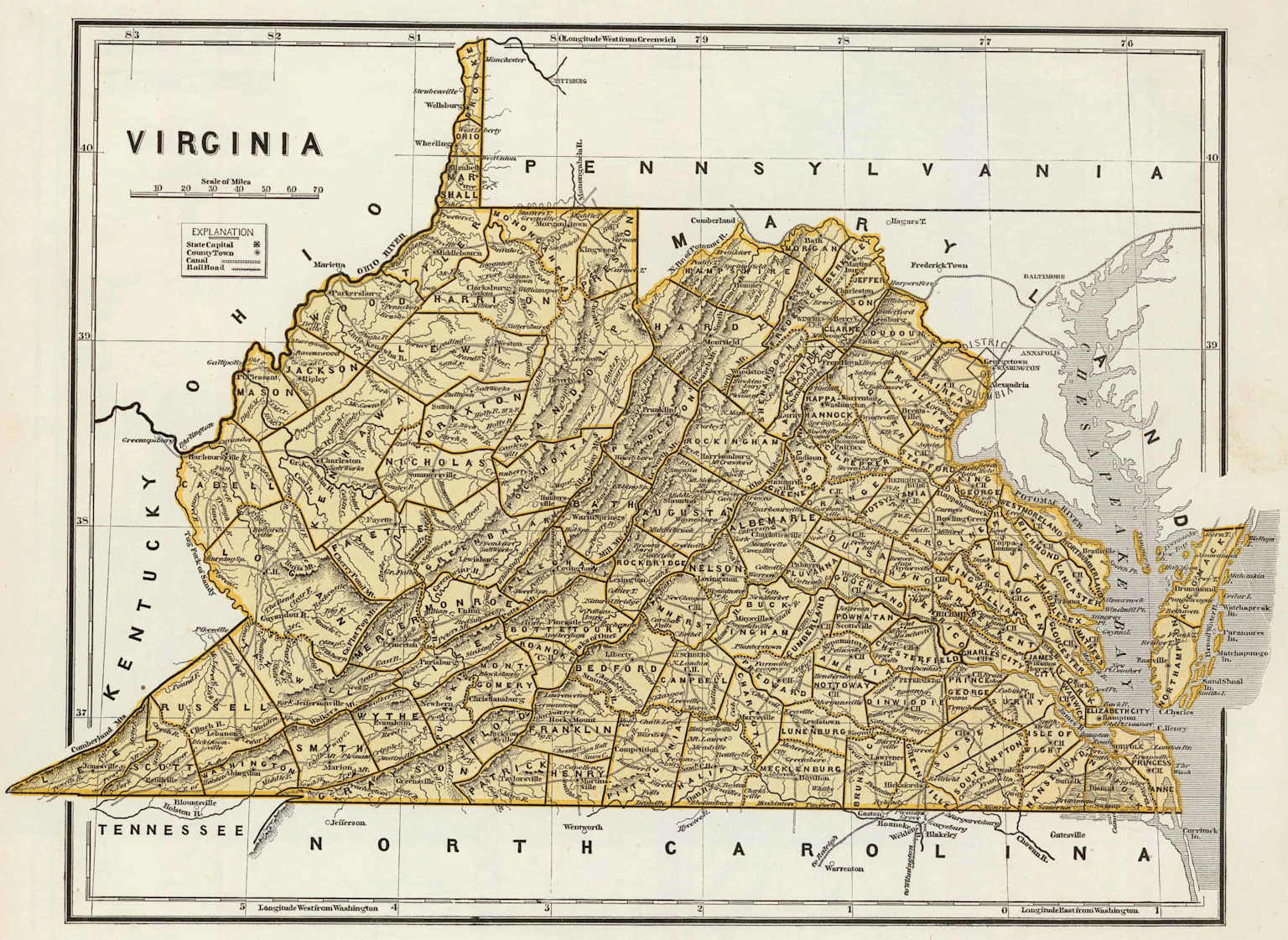
James Freeman (born about 1750; died between March and 28 July 1828) spent most of his adult life in Bedford County, Virginia, with repeated appearances in land and court records tied to the Turner's Mountain / Turner Creek / Falling Creek area.
He’s a key “anchor patriarch” in the broader Q‑BZ2738 Freeman puzzle because his life is documentable in Virginia, yet his parents and exact origins remain uncertain—exactly where DNA and cluster research can add clarity.
From Lunenburg into Bedford
A James Freeman appears in earlier Lunenburg County tithe contexts (including entries associated with a “John Freeman Sr.”), and then James shows up clearly in Bedford County by the early 1770s through land transactions.
Because Bedford was formed from Lunenburg in 1754, this pattern may represent a single man whose record trail shifts as county jurisdictions change.
Land, place, and community ties
James’s land trail is unusually strong: he is tied to a 1774 purchase of 242 acres on Falling Mountain/Falling Creek and later appears in an 1788 transaction where he and his wife Sarah sell 100 acres on Falling Creek.
He also shows up in Bedford court orders connected to civic duties like juries and road work, which helps place him socially and geographically even when other records are sparse.
Family: Sarah (Unknown) and a large household
James’s wife is consistently identified as Sarah in the records used to reconstruct this family, but her maiden surname remains unproven (with candidate surnames proposed but not established).
James and Sarah are associated with a large set of children, many of whom migrate to Tennessee and beyond, which is exactly the kind of dispersal that later produces “same-name Freeman” collisions across frontier counties.

Notes and next steps
The most important work ahead is separating “same-name” James/John Freeman entries across Lunenburg/Bedford and proving which ones belong to this man using witnesses, neighbors, and land geography—not just matching names and dates.
The secondary goal is to align those documentary clusters with Y‑DNA branch structure so we can push one generation earlier with confidence.
Link: James Freeman (abt.1750–bef.1828) on WikiTree: https://www.wikitree.com/wiki/Freeman-11363
James line project lead: Our resident expert and project lead for the James Freeman (Bedford, VA) line is David Kent Freeman; if you’re researching this branch and want to compare notes (documents, descendants, or DNA context), you can contact him via the above wikitree page.
He’s a key “anchor patriarch” in the broader Q‑BZ2738 Freeman puzzle because his life is documentable in Virginia, yet his parents and exact origins remain uncertain—exactly where DNA and cluster research can add clarity.
From Lunenburg into Bedford
A James Freeman appears in earlier Lunenburg County tithe contexts (including entries associated with a “John Freeman Sr.”), and then James shows up clearly in Bedford County by the early 1770s through land transactions.
Because Bedford was formed from Lunenburg in 1754, this pattern may represent a single man whose record trail shifts as county jurisdictions change.
Land, place, and community ties
James’s land trail is unusually strong: he is tied to a 1774 purchase of 242 acres on Falling Mountain/Falling Creek and later appears in an 1788 transaction where he and his wife Sarah sell 100 acres on Falling Creek.
He also shows up in Bedford court orders connected to civic duties like juries and road work, which helps place him socially and geographically even when other records are sparse.
Family: Sarah (Unknown) and a large household
James’s wife is consistently identified as Sarah in the records used to reconstruct this family, but her maiden surname remains unproven (with candidate surnames proposed but not established).
James and Sarah are associated with a large set of children, many of whom migrate to Tennessee and beyond, which is exactly the kind of dispersal that later produces “same-name Freeman” collisions across frontier counties.
The will (1822/1828): the best single snapshot
James left a will dated 28 Aug 1822 that was proved 28 Jul 1828 in Bedford County, naming wife Sarah, multiple sons (including John, James, William, Richard, Thomas, Moses), and daughters identified by married surnames (including Dowdy, Robertson, Cliborn, Hutts, White, Glovier, Arthur).
It also references the children of a deceased son Jesse and lays out a multi-share distribution after Sarah’s death, giving a roadmap for following the estate in later Bedford records.
DNA context (kept in its lane)
A documented descendant line of James is associated with Y‑DNA under the Q‑BZ2738 umbrella, placed on a downstream branch reported as Q‑FTH36469 in the James line context.
That doesn’t identify James’s father, but it does give us a strong constraint for comparing James’s paternal line against other Freeman anchor lines when paper records stop cooperating.
James left a will dated 28 Aug 1822 that was proved 28 Jul 1828 in Bedford County, naming wife Sarah, multiple sons (including John, James, William, Richard, Thomas, Moses), and daughters identified by married surnames (including Dowdy, Robertson, Cliborn, Hutts, White, Glovier, Arthur).
It also references the children of a deceased son Jesse and lays out a multi-share distribution after Sarah’s death, giving a roadmap for following the estate in later Bedford records.
DNA context (kept in its lane)
A documented descendant line of James is associated with Y‑DNA under the Q‑BZ2738 umbrella, placed on a downstream branch reported as Q‑FTH36469 in the James line context.
That doesn’t identify James’s father, but it does give us a strong constraint for comparing James’s paternal line against other Freeman anchor lines when paper records stop cooperating.
Notes and next steps
The most important work ahead is separating “same-name” James/John Freeman entries across Lunenburg/Bedford and proving which ones belong to this man using witnesses, neighbors, and land geography—not just matching names and dates.
The secondary goal is to align those documentary clusters with Y‑DNA branch structure so we can push one generation earlier with confidence.
Link: James Freeman (abt.1750–bef.1828) on WikiTree: https://www.wikitree.com/wiki/Freeman-11363
James line project lead: Our resident expert and project lead for the James Freeman (Bedford, VA) line is David Kent Freeman; if you’re researching this branch and want to compare notes (documents, descendants, or DNA context), you can contact him via the above wikitree page.


No comments:
Post a Comment