John Freeman (c.1755–after 1814) was a frontier-era landholder and speculator whose documented life runs along the Tennessee–North Carolina borderlands, but whose origins (parents, wife, and birthplace) remain unknown.
He matters in this project because he is the current “paper trail edge” of my paternal Freeman line—everything earlier has to be treated as hypothesis and tested, not assumed.
What the records show (1795–1814)
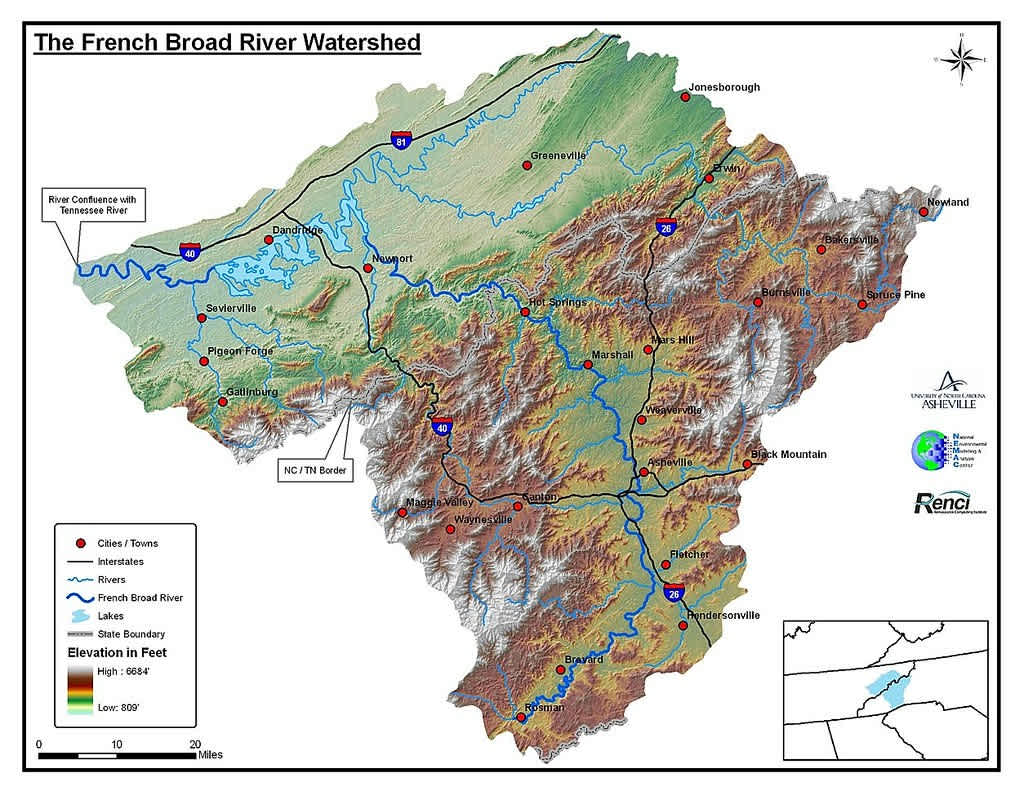
John first appears in surviving records in Knox County, Tennessee, buying 100 acres on Little Sinking Creek which today is the heart of downtown Knoxville in 1795 from Stockley Donelson and selling it in early 1796, with the repeated presence of William Murphy as a witness signaling a durable business relationship.
He remains active in Knox County through at least 1799—appearing on a 1796 tax list, witnessing deeds, and purchasing another 100 acres from William Murphy north of the Tennessee River.
In parallel, he expanded into western North Carolina: in 1798 he bought 160 acres in Buncombe County on Caney (Cane) River from Hickman Hensley, establishing the first documented Freeman land footprint in that area.
By 1801 he’s still acting as a cross-border witness in a deed involving a Knox County party and property on Gap Creek, reinforcing the pattern that he operated across jurisdictions rather than staying confined to one county.
Community status and legal footprint (1807–1809)
John’s civic footprint includes being ordered to jury duty in Knox County in 1807, which typically indicates he was viewed as a qualified local property-holder.
In 1809, a Burke County court record references a deed of trust and bill of sale involving enslaved people and other property, pointing to substantial wealth and sophisticated financial dealings by frontier standards.
The Caney River cluster (1810)
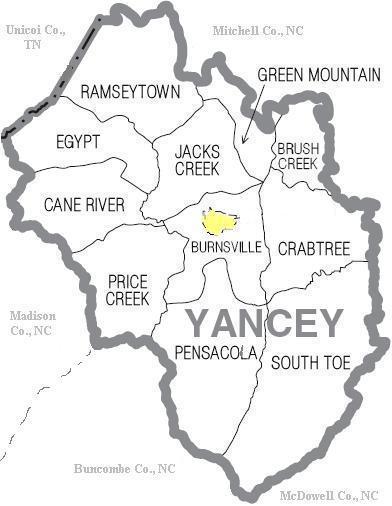
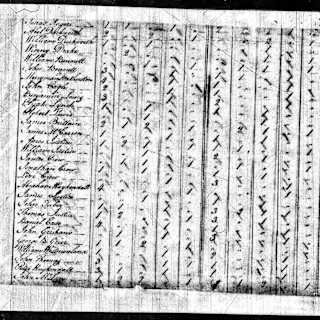
The 1810 Buncombe County census is the best snapshot we have of John’s household structure because it shows adjacent households on Caney River: Thomas Benoni Hopson, “John Freeman Jr,” and “John Freeman Sr.”
“John Freeman Sr” is enumerated with an older couple and two children aged 10–15 (one male, one female), suggesting additional children in the household beyond the “Jr” family and reinforcing that this was a multi-household settlement cluster.
The last sightings (1814)
In September 1814 John Freeman and Joshua Freeman witnessed Jesse Freeman’s land sale on Sandy Mush/Turkey Creek, which is valuable because it ties John into a broader Freeman network in the county.
In October 1814, Buncombe court minutes record “Littleberry Burnett vs John Freeman,” and the reappearance of William Murphy as a defense witness links John’s 1790s Knox County business world directly to his final documented years.
DNA context, and what it does not prove
Advanced Y‑DNA evidence indicates John belongs to the Q‑BZ2738 Freeman network and is a paternal cousin of an Aaron Freeman line, giving us a powerful constraint for sorting which Freeman families could plausibly connect when the paperwork doesn’t.
But DNA does not, by itself, name John’s parents or prove that any particular coastal North Carolina “John Freeman” record set is his—it gives us a framework to test hypotheses with the right set of independent male-line descendants.
Advanced Y‑DNA evidence indicates John belongs to the Q‑BZ2738 Freeman network and is a paternal cousin of an Aaron Freeman line, giving us a powerful constraint for sorting which Freeman families could plausibly connect when the paperwork doesn’t.
But DNA does not, by itself, name John’s parents or prove that any particular coastal North Carolina “John Freeman” record set is his—it gives us a framework to test hypotheses with the right set of independent male-line descendants.
A new lead to close: old Rowan County (1760s–1770s)
One promising clue—still separate from the Bertie/Chowan hypothesis—is the existence of John Freeman land deeds in old Rowan County in the 1760s–1770s, which may represent a distinct Freeman cluster that hasn’t been cleanly tied to any other “John Freeman” identity.
My goal is to close this lead by treating “Rowan John” as its own hypothesis, extracting the full deed witness/neighbor geography, and then testing whether that cluster can be connected (or definitively ruled out) against the Q‑BZ2738 framework.
Research questions for future posts
- In the 1810 Buncombe census Caney River neighborhood (modern Burnsville area), we see adjacent households for Benoni Hopson, John Freeman (Jr), and John Freeman (Sr); what does that physical clustering imply about migration timing and kinship when combined with the known Hopson marriages (Rebecca Hopson → John Freeman Jr; Charity Hopson → Samuel Freeman)?
- Can we identify (by later records) the two 10–15 children enumerated in John Freeman Sr’s 1810 household, one is most certainly Samuel Freeman. Do their later marriages/deeds/estates reveal John Sr’s wife’s family or a prior county of residence?
- What can be learned by treating William Murphy (seen with John in Knox County and again as a witness in 1814 Buncombe court) as a “through-line associate”: does Murphy connect to any Freeman/Hopson/Hensley records that point back to an origin county? Was John Freeman Sr's wife a sister of William Murphy?
- Do the old Rowan County (1760s–1770s) John Freeman deeds form a coherent single cluster (same witnesses/watercourses), and if so, does that cluster leave a documentary trail into later counties that could intersect with our John’s world?
- Which candidate coastal/NC Freeman clusters can be ruled in or ruled out by the Q‑BZ2738 Y‑DNA framework, and what would “proof” look like (a shared downstream branch between independent male-line descendants, not just similar names in the same county)?


No comments:
Post a Comment